400 Tie Points Solderless Breadboard


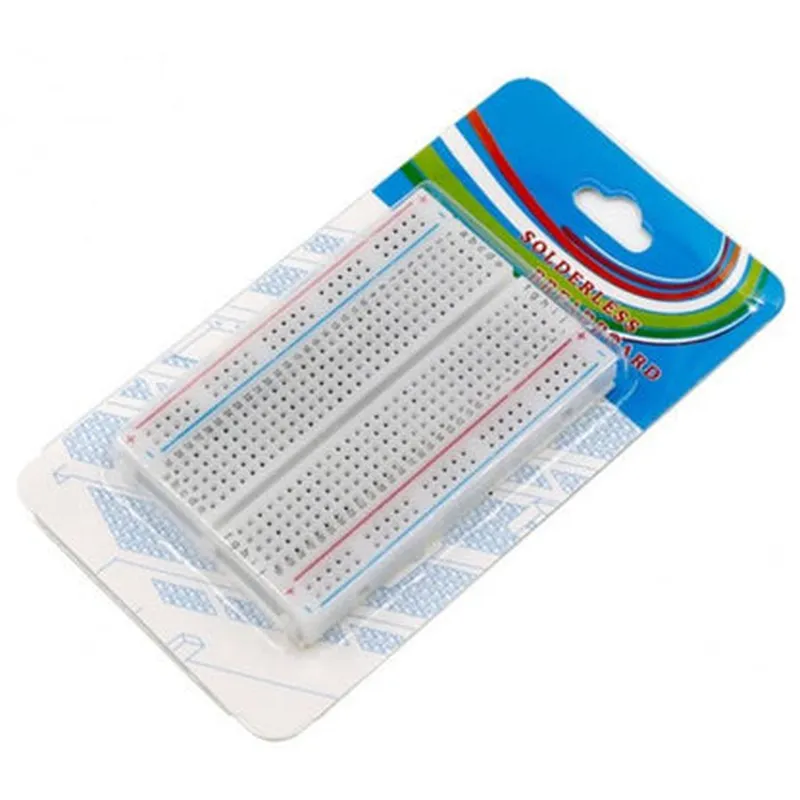
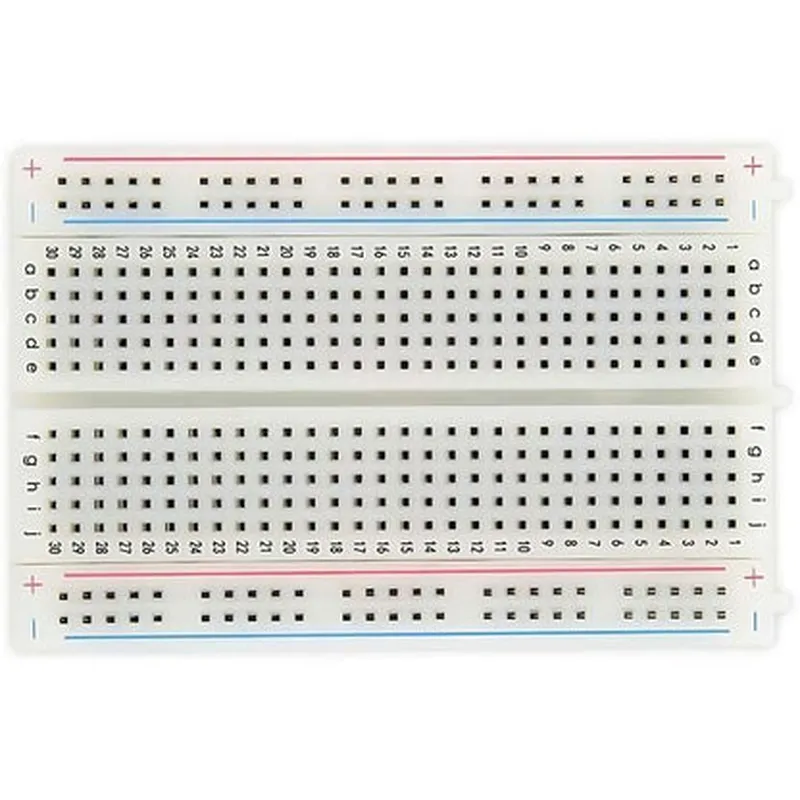
400 Tie Points Solderless Breadboard
The 400 Tie Points Solderless Breadboard is a versatile and convenient platform for prototyping and testing electronic circuits. It is a type of solderless breadboard, designed to facilitate easy and rapid assembly of electronic components without the need for soldering. This breadboard is ideal for students, hobbyists, and professionals alike, providing a efficient and organized way to build and test complex electronic projects.
The primary function of the 400 Tie Points Solderless Breadboard is to provide a flexible and reusable platform for building and testing electronic circuits. It allows users to connect and disconnect components quickly and easily, making it an essential tool for prototyping and development.
| The 400 Tie Points Solderless Breadboard is suitable for a wide range of applications, including |
Prototyping and testing electronic circuits
Developing IoT projects
Building proof-of-concept models
Educating students in electronics and engineering
Creating prototype devices and gadgets
Rapid prototyping and development
In summary, the 400 Tie Points Solderless Breadboard provides a versatile and convenient platform for building and testing electronic circuits. Its solderless design, high density of tie points, and durable construction make it an ideal choice for professionals and hobbyists alike.
400 Tie Points Solderless Breadboard DocumentationOverviewThe 400 Tie Points Solderless Breadboard is a versatile and convenient prototyping platform for electronic circuits. It provides a hassle-free way to build and test circuits without the need for soldering. The breadboard features 400 tie points, making it ideal for complex projects and experiments.Key Features400 tie points for connecting components
Solderless design for easy prototyping and circuit modification
Compatible with a wide range of components, including resistors, capacitors, ICs, and more
Durable construction with a sturdy plastic base and high-quality copper contactsConnecting ComponentsTo connect components to the breadboard, simply insert the component leads into the corresponding tie points. The breadboard's spring-loaded contacts will securely hold the leads in place. Make sure to align the component leads with the correct tie points to ensure a secure connection.Code Examples### Example 1: LED Circuit with a 400 Tie Points Solderless Breadboard (Arduino)In this example, we will create a simple LED circuit using an Arduino board and the 400 Tie Points Solderless Breadboard.Hardware ComponentsArduino Board (e.g., Arduino Uno)
400 Tie Points Solderless Breadboard
LED (any color)
220 Ohm Resistor
Jumper WiresCircuit DiagramConnect the LED to digital pin 13 on the Arduino board through a 220 Ohm resistor. Use jumper wires to connect the components to the breadboard.Arduino Code
```cpp
const int ledPin = 13; // Choose the pin for the LEDvoid setup() {
pinMode(ledPin, OUTPUT);
}void loop() {
digitalWrite(ledPin, HIGH); // Turn the LED on
delay(1000); // Wait for 1 second
digitalWrite(ledPin, LOW); // Turn the LED off
delay(1000); // Wait for 1 second
}
```
### Example 2: Voltage Divider Circuit with a 400 Tie Points Solderless BreadboardIn this example, we will create a voltage divider circuit using the 400 Tie Points Solderless Breadboard.Hardware Components400 Tie Points Solderless Breadboard
2 x 1k Ohm Resistors
1 x 2k Ohm Resistor
1 x 9V Battery
1 x Voltage Meter (optional)Circuit DiagramConnect the resistors to form a voltage divider circuit. The output voltage can be measured using a voltage meter.CalculationsInput Voltage (Vin) = 9V
R1 = 1k Ohm
R2 = 1k Ohm
R3 = 2k Ohm
Output Voltage (Vout) = Vin (R2 / (R1 + R2 + R3)) = 3VTips and VariationsUse the 400 Tie Points Solderless Breadboard to experiment with different resistor values and voltage sources to observe the effects on the output voltage.
Add more components, such as capacitors or diodes, to create more complex circuits.
Use the breadboard to prototype and test circuits before moving to a PCB or perfboard.Remember to always follow proper safety precautions when working with electronic components and circuits.