Vero Board (2x3 inch)


Vero Board (2x3 inch)
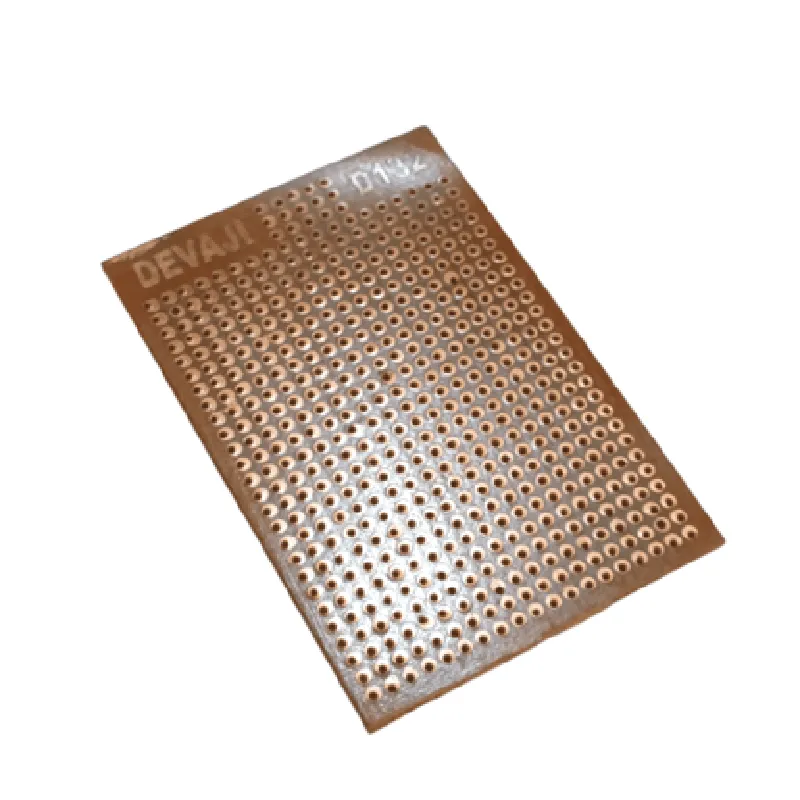
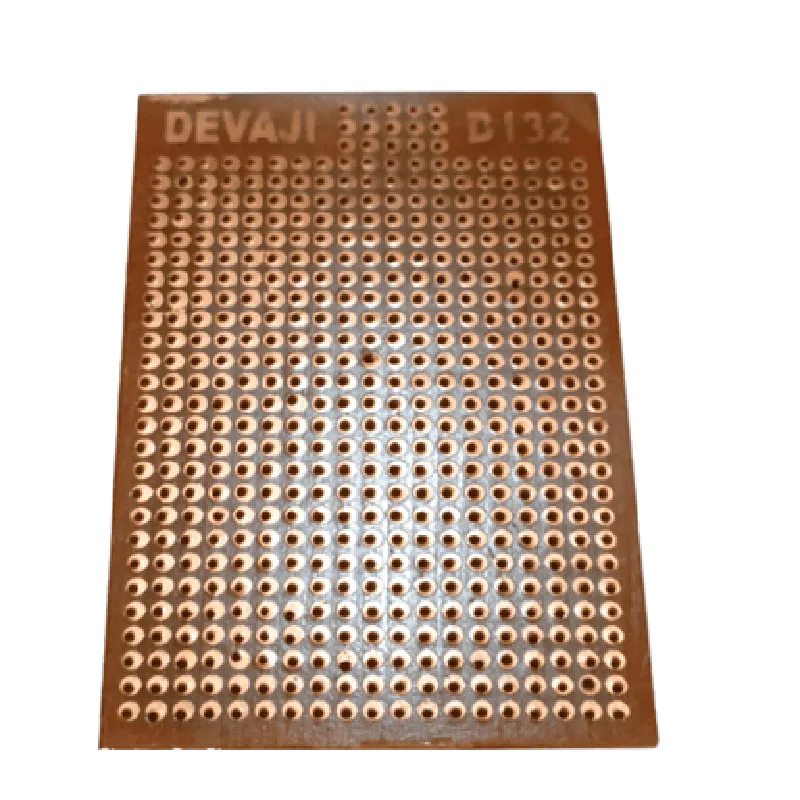
The Vero Board (2x3 inch) is a type of printed circuit board (PCB) designed for prototyping and building electronic circuits. It is a versatile and popular platform for experimenting with various electronic components, microcontrollers, and other devices. The Vero Board is a copper-clad phenolic board with a grid of holes, allowing users to connect components using wire-wrap or soldering techniques.
| The primary function of the Vero Board is to provide a platform for prototyping and testing electronic circuits. It allows users to easily connect and disconnect components, making it an ideal tool for experimentation, development, and education. The Vero Board is suitable for a wide range of applications, including |
Prototyping electronic circuits
Building proof-of-concept models
Testing and verifying circuit designs
Developing microcontroller-based projects
Creating small-scale electronic devices
| The Vero Board is suitable for a wide range of applications, including |
Electronics prototyping and development
Microcontroller-based projects (e.g., Arduino, Raspberry Pi)
Robotics and automation
IoT projects (e.g., sensors, actuators, communication modules)
Educational projects and experiments
Hobbyist projects (e.g., audio, video, home automation)
The Vero Board (2x3 inch) is a versatile and reliable platform for prototyping and building electronic circuits. Its compact size, grid layout, and copper clad surface make it an ideal tool for experimenting with various electronic components and microcontrollers. With its low cost and adaptability, the Vero Board is an excellent choice for hobbyists, students, and professionals alike.
Vero Board (2x3 inch) DocumentationOverviewThe Vero Board (2x3 inch) is a compact, general-purpose printed circuit board (PCB) designed for prototyping and building electronic circuits. It features a copper-clad phenolic resin substrate, with a grid of 0.1-inch spaced holes and a 2x3 inch rectangular shape. The Vero Board is ideal for connecting discrete components, breadboarding, and creating small electronic projects.SpecificationsDimensions: 2 inches x 3 inches (50.8 mm x 76.2 mm)
Hole spacing: 0.1 inches (2.54 mm)
Material: Copper-clad phenolic resin substrate
Thickness: 1.6 mmCode Examples### Example 1: Simple LED Circuit using Vero BoardComponents:1 x Vero Board (2x3 inch)
1 x LED (any color)
1 x 1k Resistor
1 x Battery (9V)
Jumper wiresCircuit Diagram:```markdown
+-----------+
| |
| Battery |
| (9V) |
+-----------+
|
|
v
+-----------+
| |
| Resistor |
| (1k) |
+-----------+
|
|
v
+-----------+
| |
| LED |
| |
+-----------+
|
|
v
+-----------+
| |
| Vero Board|
| |
+-----------+
```Code:
```c
// No code required, this is a simple circuit example
```Description:In this example, we create a simple LED circuit using the Vero Board. Connect the positive leg of the LED to the 1k resistor, and the other leg of the resistor to the positive terminal of the 9V battery. Connect the negative leg of the LED to the negative terminal of the battery. Use jumper wires to connect the components to the Vero Board. This circuit will light up the LED when the battery is connected.### Example 2: IoT Sensor Node using Vero Board and ESP8266 MicrocontrollerComponents:1 x Vero Board (2x3 inch)
1 x ESP8266 Microcontroller (e.g., NodeMCU)
1 x DHT11 Temperature and Humidity Sensor
1 x Breadboard
Jumper wiresCircuit Diagram:```markdown
+-----------+
| |
| ESP8266 |
| (NodeMCU) |
+-----------+
|
|
v
+-----------+
| |
| DHT11 |
| (Sensor) |
+-----------+
|
|
v
+-----------+
| |
| Vero Board|
| |
+-----------+
|
|
v
+-----------+
| |
| Breadboard|
| |
+-----------+
```Code:
```c
#include <WiFi.h>
#include <DHT.h>#define DHTPIN 2 // DHT11 pin connected to Vero Board
#define DHTTYPE DHT11DHT dht(DHTPIN, DHTTYPE);const char ssid = "your_wifi_ssid";
const char password = "your_wifi_password";WiFiClient client;void setup() {
Serial.begin(115200);
dht.begin();
WiFi.begin(ssid, password);
while (WiFi.status() != WL_CONNECTED) {
delay(1000);
Serial.println("Connecting to WiFi...");
}
Serial.println("Connected to WiFi");
Serial.println("Initializing DHT11...");
}void loop() {
float temp = dht.readTemperature();
float humi = dht.readHumidity();
if (isnan(temp) || isnan(humi)) {
Serial.println("Failed to read from DHT11 sensor!");
} else {
Serial.print("Temperature: ");
Serial.print(temp);
Serial.println(" C");
Serial.print("Humidity: ");
Serial.print(humi);
Serial.println(" %");
}
delay(2000);
}
```Description:In this example, we create an IoT sensor node using the Vero Board, ESP8266 microcontroller, and DHT11 temperature and humidity sensor. The ESP8266 connects to a WiFi network and reads data from the DHT11 sensor, printing the temperature and humidity values to the serial console. The Vero Board is used to connect the ESP8266 and DHT11 sensor, and the breadboard is used to connect the components. This project demonstrates the versatility of the Vero Board in IoT applications.