5V 30A 1-Channel Relay Module


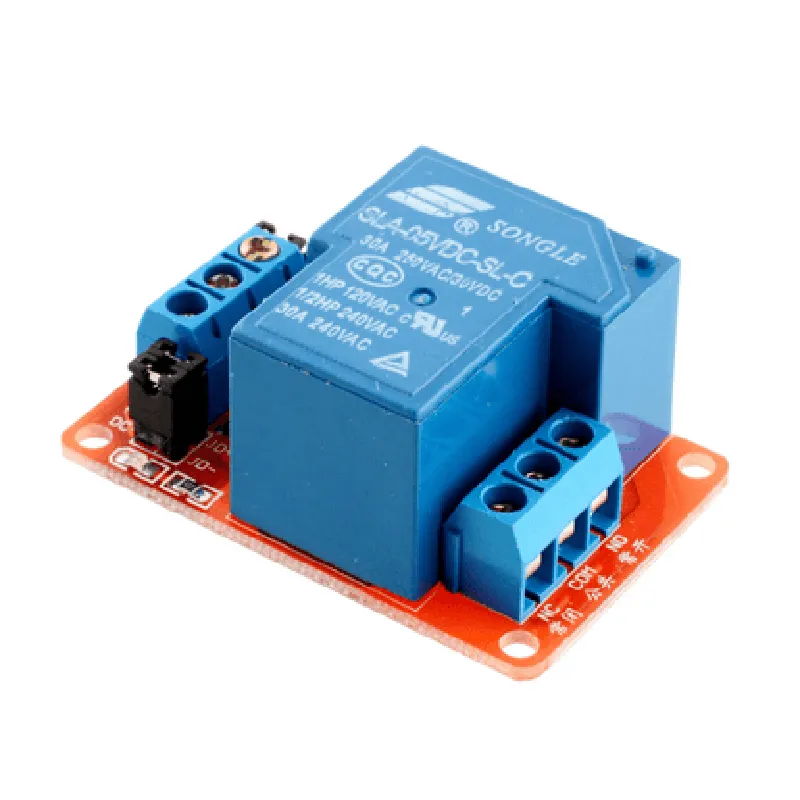
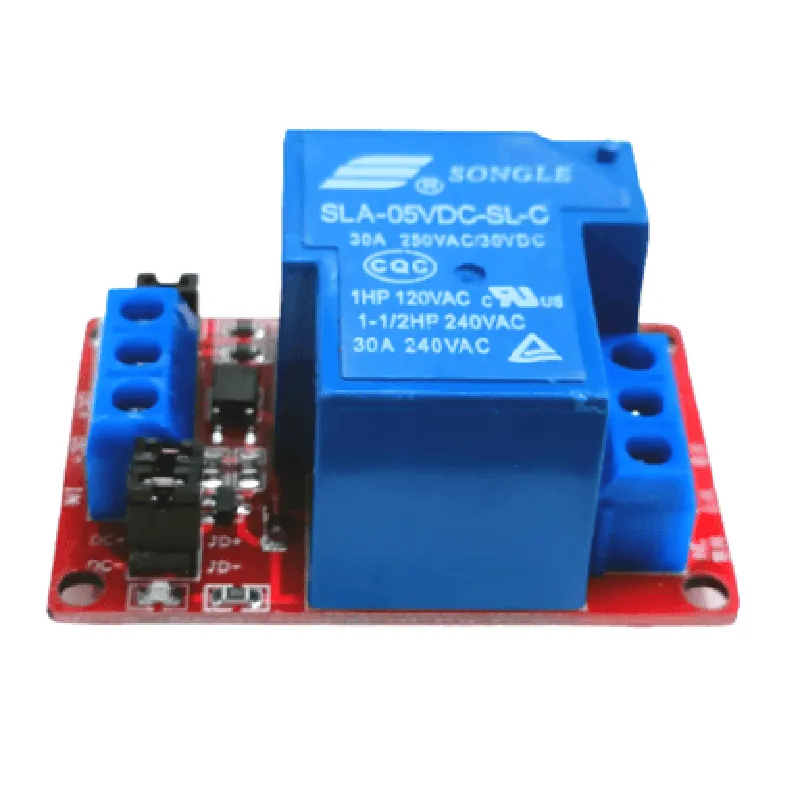
5V 30A 1-Channel Relay Module
The 5V 30A 1-Channel Relay Module is a high-power relay module designed for applications that require controlling high-current loads. This module is ideal for IoT projects, home automation, and industrial control systems that require switching high-power devices.
The 5V 30A 1-Channel Relay Module is a digital relay module that allows users to control high-power loads using a low-voltage digital signal. The module consists of a relay, a control circuit, and a trigger circuit. When a digital signal is applied to the input, the relay switches ON, connecting the high-power load to the power source. When the digital signal is removed, the relay switches OFF, disconnecting the load from the power source.
### Operating Characteristics
5V DC
30A
SPST (Single Pole Single Throw)
Normally Open (NO) and Normally Closed (NC)
### Interface
5V digital signal (compatible with most microcontrollers, Arduino, and Raspberry Pi)
Screw terminals for connecting high-power load
### Relay Specifications
30A
250V AC / 30V DC
< 50m
50Hz - 60Hz
### Module Specifications
-40C to 85C
-40C to 125C
5% to 95% RH (non-condensing)
68.5 x 44 x 22.5mm (L x W x H)
60g
### Safety and Protection
| Short-circuit Protection | Yes |
Yes
| Electromagnetic Compatibility (EMC) | Compliant with CE, FCC, and RoHS standards |
### Certifications and Compliance
| UL (Underwriters Laboratories) Certification | Yes |
| CE (Conformit Europene) Certification | Yes |
| FCC (Federal Communications Commission) Compliance | Yes |
| RoHS (Restriction of Hazardous Substances) Compliance | Yes |
| The 5V 30A 1-Channel Relay Module is suitable for a wide range of applications, including |
Home automation systems
Industrial control systems
IoT projects
Robotics
Motor control systems
Lighting control systems
1 x 5V 30A 1-Channel Relay Module
1 x User Manual
Please note that proper wiring, safety precautions, and protective measures should be taken when using this module to avoid electrical shock, fire hazards, or damage to equipment.
5V 30A 1-Channel Relay Module DocumentationOverviewThe 5V 30A 1-Channel Relay Module is a widely used IoT component that allows you to control high-power devices using a microcontroller or a single-board computer. This module features a single relay that can handle up to 30A of current, making it suitable for a wide range of applications, from home automation to industrial control systems.PinoutThe module has the following pinout:VCC: 5V power supply
GND: Ground
IN: Input pin to control the relay
COM: Common pin
NC: Normally Closed pin
NO: Normally Open pinOperating PrincipleThe relay module works by using an electromagnet to toggle the relay switch. When the input pin (IN) is set to a high logic level (5V), the electromagnet is energized, and the relay switch is closed, connecting the COM pin to the NO pin. When the input pin is set to a low logic level (0V), the electromagnet is de-energized, and the relay switch is open, connecting the COM pin to the NC pin.Code ExamplesExample 1: Controlling a Relay with ArduinoIn this example, we'll use an Arduino Uno board to control the relay module.```c++
const int relayPin = 2; // Choose a digital pin to control the relayvoid setup() {
pinMode(relayPin, OUTPUT);
}void loop() {
digitalWrite(relayPin, HIGH); // Turn the relay ON
delay(1000);
digitalWrite(relayPin, LOW); // Turn the relay OFF
delay(1000);
}
```Example 2: Controlling a Relay with Raspberry Pi (Python)`In this example, we'll use a Raspberry Pi board to control the relay module using Python.```python
import RPi.GPIO as GPIO
import timeGPIO.setmode(GPIO.BCM)
relay_pin = 17 # Choose a GPIO pin to control the relay
GPIO.setup(relay_pin, GPIO.OUT)while True:
GPIO.output(relay_pin, GPIO.HIGH) # Turn the relay ON
time.sleep(1)
GPIO.output(relay_pin, GPIO.LOW) # Turn the relay OFF
time.sleep(1)
```Example 3: Controlling a Relay with ESP32 (MicroPython)In this example, we'll use an ESP32 board to control the relay module using MicroPython.```python
import machine
import utimerelay_pin = machine.Pin(32, machine.Pin.OUT) # Choose a GPIO pin to control the relaywhile True:
relay_pin.value(1) # Turn the relay ON
utime.sleep(1)
relay_pin.value(0) # Turn the relay OFF
utime.sleep(1)
```Note: Make sure to adjust the pin numbers and libraries according to your specific board and setup. Additionally, ensure that the relay module is properly powered and connected to the device you want to control.By using this 5V 30A 1-Channel Relay Module with the provided code examples, you can easily integrate it into your IoT projects and control high-power devices with ease.