ESP32 dual-core 32-bit LX6
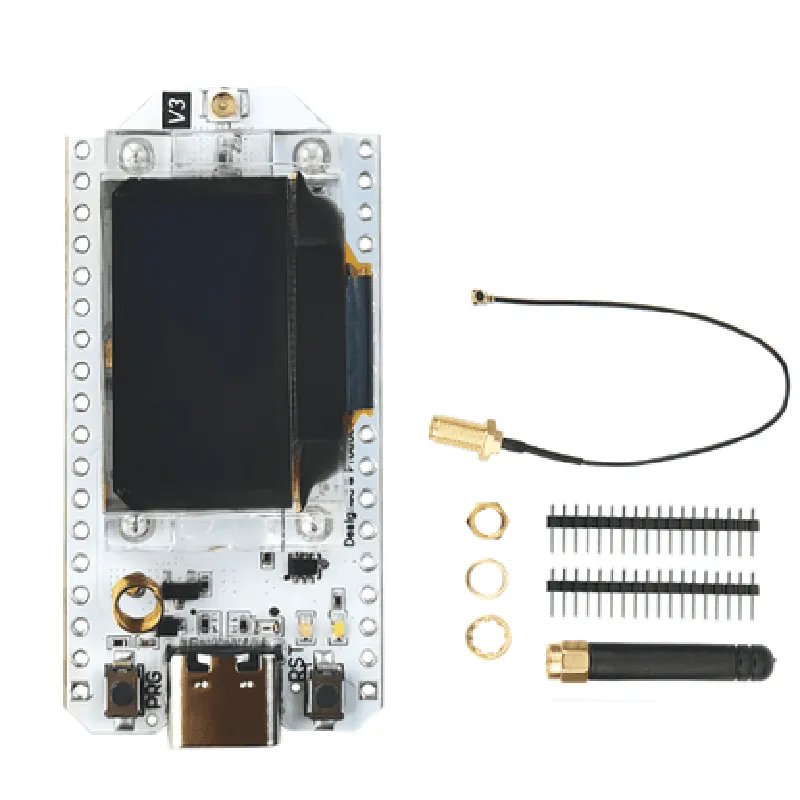
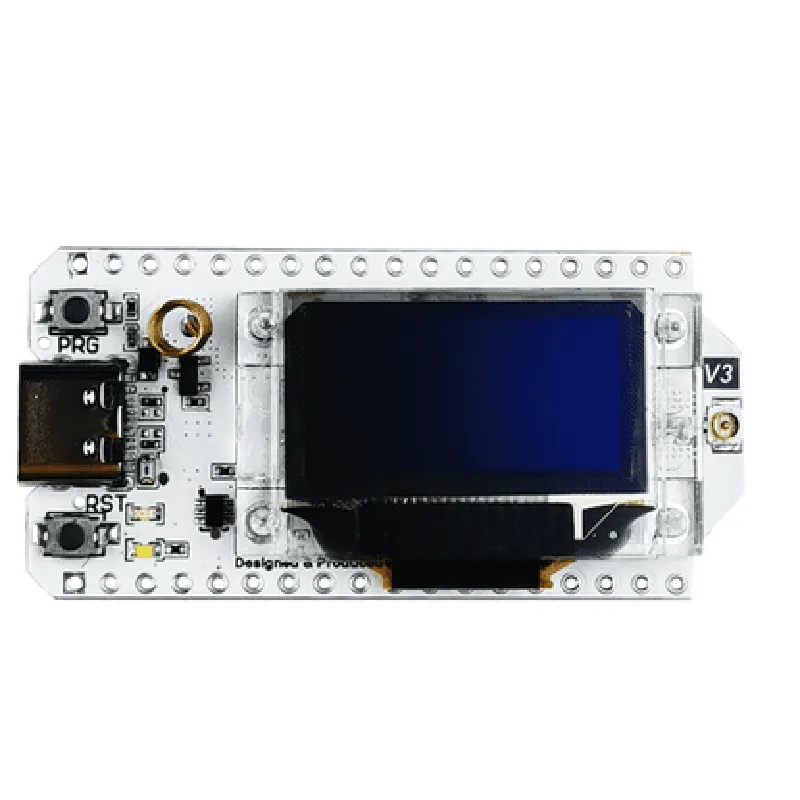
ESP32 dual-core 32-bit LX6
Up to 240 MHz
433 MHz or 868 MHz (depending on region)
Up to 10 km
0.96-inch blue OLED, 128x64 pixels
4MB flash, 520KB SRAM
USB Type-C
5V DC
-20C to 80C
Conclusion
The ESP32 LoRa with 0.96 Inch Blue OLED Display (Type C- Connector) is a powerful and feature-rich IoT development board that offers a wide range of capabilities and functionalities. Its compact size, low-power consumption, and high-performance capabilities make it an ideal choice for building innovative IoT projects.
ESP32 LoRa with 0.96 Inch Blue OLED Display (Type C- Connector) DocumentationOverviewThe ESP32 LoRa with 0.96 Inch Blue OLED Display is a versatile Internet of Things (IoT) component that combines the popular ESP32 microcontroller with a LoRa transceiver and a 0.96-inch blue OLED display. The module features a Type-C connector for easy connectivity and programming. This documentation provides an overview of the component's technical specifications, pinouts, and code examples for various applications.Technical SpecificationsMicrocontroller: ESP32 (Dual-core 32-bit LX6 microprocessor)
LoRa Transceiver: SX1276 (Long-range, low-power LoRa transceiver)
Display: 0.96-inch Blue OLED display (128x64 pixels)
Connector: Type-C connector
Operating Frequency: 868 MHz (EU) / 915 MHz (US)
Power Consumption: 10mA (average) to 250mA (peak)PinoutsThe ESP32 LoRa with 0.96 Inch Blue OLED Display has the following pinouts:Type-C Connector:
+ USB (D+/D-/VCC/GND)
+ UART (RX/TX)
+ GPIO (16 pins)
LoRa Antenna Connector: U.FL connector
OLED Display Connector: 7-pin FPC connectorCode Examples### Example 1: Basic LoRa Transceiver Example with OLED DisplayThis example demonstrates how to use the ESP32 LoRa module to send and receive LoRa packets, while displaying the status on the OLED display.```c
#include <LoRa.h>
#include <SPI.h>
#include <U8x8lib.h>// OLED display settings
U8X8_SSD1306_128X64_NONAME_HW_I2C u8x8(U8X8_PIN_NONE);// LoRa settings
#define freq 868E6 // EU frequency
#define bandwidth 125E3
#define spreadingFactor 7
#define codingRate 5
#define preambleLength 8void setup() {
Serial.begin(9600);
u8x8.begin();
u8x8.setFont(u8x8_font_chroma48medium8_r);
u8x8.setCursor(0, 0);
u8x8.print("LoRa Transceiver");
// Initialize LoRa module
LoRa.setPins(RX, TX, RST);
LoRa.begin(freq, bandwidth, spreadingFactor, codingRate, preambleLength);
}void loop() {
// Send a LoRa packet
LoRa.beginPacket();
LoRa.print("Hello, world!");
LoRa.endPacket();
u8x8.setCursor(0, 1);
u8x8.print("Packet sent!");
delay(1000);
// Receive a LoRa packet
int packetSize = LoRa.parsePacket();
if (packetSize) {
u8x8.setCursor(0, 2);
u8x8.print("Packet received!");
while (LoRa.available()) {
char c = LoRa.read();
Serial.print(c);
}
}
delay(1000);
}
```### Example 2: IoT Sensor Node with LoRa and OLED DisplayThis example demonstrates how to use the ESP32 LoRa module as an IoT sensor node, sending temperature and humidity data to a remote LoRa gateway, while displaying the sensor readings on the OLED display.```c
#include <LoRa.h>
#include <SPI.h>
#include <U8x8lib.h>
#include <DHT.h>// OLED display settings
U8X8_SSD1306_128X64_NONAME_HW_I2C u8x8(U8X8_PIN_NONE);// LoRa settings
#define freq 868E6 // EU frequency
#define bandwidth 125E3
#define spreadingFactor 7
#define codingRate 5
#define preambleLength 8// DHT sensor settings
#define DHTPIN 15
#define DHTTYPE DHT11DHT dht(DHTPIN, DHTTYPE);void setup() {
Serial.begin(9600);
u8x8.begin();
u8x8.setFont(u8x8_font_chroma48medium8_r);
u8x8.setCursor(0, 0);
u8x8.print("IoT Sensor Node");
// Initialize LoRa module
LoRa.setPins(RX, TX, RST);
LoRa.begin(freq, bandwidth, spreadingFactor, codingRate, preambleLength);
// Initialize DHT sensor
dht.begin();
}void loop() {
// Read temperature and humidity data
float temp = dht.readTemperature();
float humi = dht.readHumidity();
// Display sensor readings on OLED display
u8x8.setCursor(0, 1);
u8x8.print("Temp: ");
u8x8.print(temp);
u8x8.print(" C");
u8x8.setCursor(0, 2);
u8x8.print("Humi: ");
u8x8.print(humi);
u8x8.print(" %");
// Send LoRa packet with sensor data
LoRa.beginPacket();
LoRa.print("T=");
LoRa.print(temp);
LoRa.print("C H=");
LoRa.print(humi);
LoRa.print("%");
LoRa.endPacket();
delay(10000);
}
```Note: These code examples are for illustrative purposes only and may require modifications to suit your specific use case. Additionally, ensure that you have the necessary dependencies installed, such as the LoRa and U8x8 libraries.